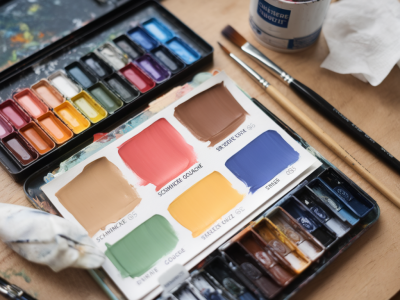
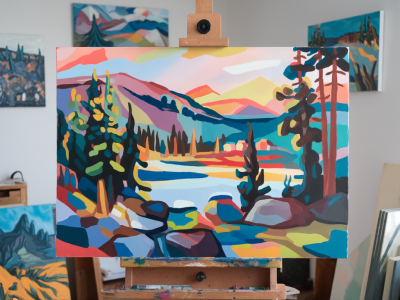
Why I wanted to test gouache with soft-body acrylicsI've long loved the matt, opaque quality of Schmincke Horadam Gouache for figure work and layered illustration. At the same time, Liquitex Soft Body Acrylics are a staple in my studio for their flow and permanence. Recently I found myself...
Sep 13, 2026
• by Éloïse Martin
Latest News from Sonriseartists Co
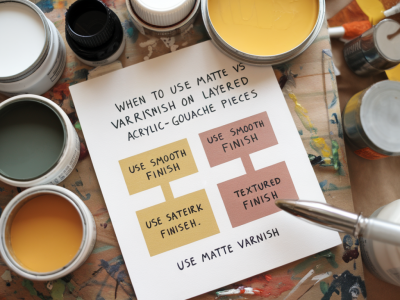
I often get asked whether to use a matte or satin varnish on mixed media pieces that combine acrylic and gouache. It’s a deceptively simple question—one that opens into considerations of colour depth, surface texture, light behaviour, and practical protection. Over time I’ve developed a little decision flowchart in my head (and on scraps of paper in the studio) that helps me choose the...
Read more...

I always approach studio visits with a clear intention: to turn generous, focused conversation into practical edits that push work toward clarity and, when relevant, gallery readiness. Over the years I’ve learned that a ninety-minute visit is a sweet spot — long enough to get under the surface, short enough to keep momentum. Here’s the structure I use (and adapt) that makes those visits...
Read more...
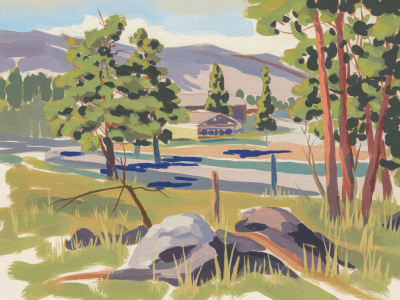
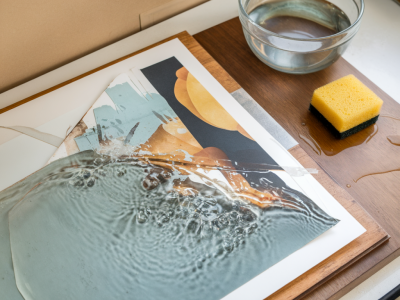
I love pushing the limits of materials — the meeting point between gouache’s matte, velvety presence and acrylic’s resilience is one of my favourite playgrounds. Over the years I’ve developed a workflow for creating small hybrid studies that retain gouache’s delicate surface but can safely be varnished or handled without the gouache lifting or changing tone. The keys are an...
Read more...
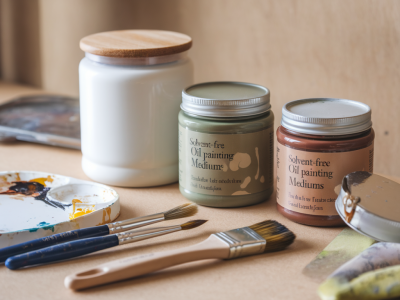
I switched to solvent-free oil painting mediums a few years ago and, like many painters, I worried about losing the handling qualities and drying behaviour I relied on. What surprised me was how small adjustments — a little warmed linseed, a touch of alkyd resin, a dash of natural dryers — can recreate the familiar buttery feel and keep reasonable drying times without the need for turpentine...
Read more...
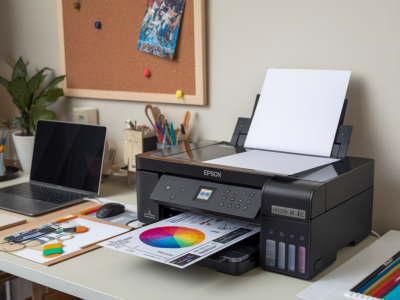
I make prints at home quite often — not just for editions but to proof files before sending work to a lab. Over the years I've developed a repeatable giclée proofing workflow using an Epson flatbed photo printer (I mostly use the Epson SureColor P600 and P800) and printable colour targets. It’s honest, practical and doesn't require sending everything out for profiling. Below I share the...
Read more...
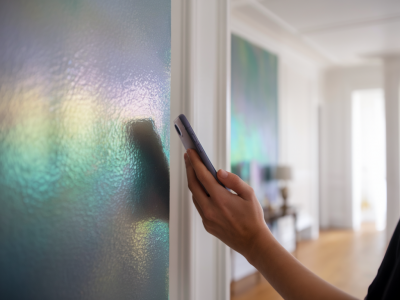
I love iridescent and interference paints for the way they shift — a colour that seems to breathe as you move. Photographing them with a phone can feel impossible at first: the camera often flattens the shimmer or misreads the colour, and you end up with a dull patch where the surface had life. Over years of testing in my studio, I’ve found simple lighting and exposure tricks that help...
Read more...

When I prepare an artist statement for a gallery submission or an open call, I aim for one page that feels like a clear invitation rather than a dense manifesto. A well-crafted one-page artist statement helps curators and selectors understand the intention behind the work, the ideas driving your practice, and the practical context—without demanding too much time from a busy reader. Below I...
Read more...
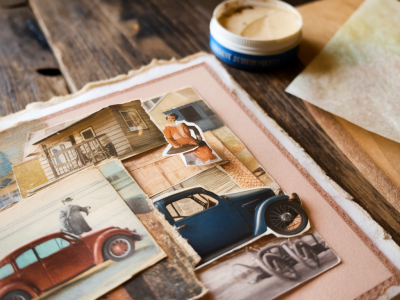
I often find that the smallest edges—torn paper, fragile ephemera, feathered collage bits—are the ones that make or break a piece. Over time, delicate edges can lift, catch, or disintegrate, and that can be devastating after hours of careful layering. I rely on two simple, conservation-friendly allies to stabilise those edges: archival (Japanese/mulberry) tissue and wheat starch paste....
Read more...
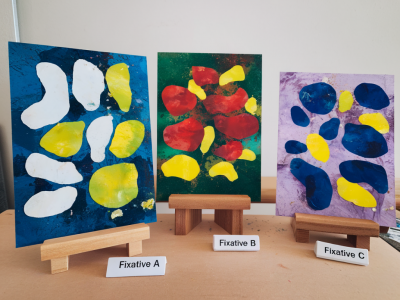
I tested three lower-VOC, water-based varnish/fixative options that are easy to find in art shops: Liquitex Solvent-Free Spray Varnish (matte), Winsor & Newton Artisan Varnish (gloss, brush-on), and Golden Polymer Varnish (satin, brush-on). My aim was practical: how do they perform on mixed-media pieces where gouache, acrylic, ink and collage meet; do they change colour or sheen; how do they...
Read more...
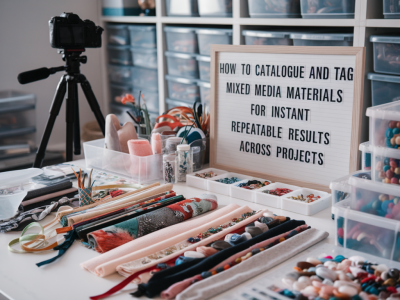
I keep a running inventory of everything I use in the studio — from the archival gesso I prefer for panels to the exact make of sumi ink I reach for when I want a fast, staining line. Over the years I developed a simple, repeatable system for cataloguing and tagging mixed-media materials that saves me time, reduces waste, and helps me recreate textures or colour interactions across different...
Read more...