Curator-led open calls can feel intimidating — a tight brief, a jury of professionals, and the sense that you're competing against a large pool of makers. Over years of applying to exhibitions and advising artists for the journal, I've learned that the difference between a shortlist and a polite rejection often comes down to how you present your idea and images, not just the work itself. Below I share practical advice, sample wording, and image guidelines that help proposals get noticed and understood quickly by curators.
Read the brief like a curator
Before drafting anything, I read the open call three times. The first pass is for overall tone and deadline; the second for specific requirements (dimensions, themes, budget, eligibility); the third for implicit priorities (do they value experimentation? community engagement? site-specific work?). Curators often include subtle clues: references to accessibility, local engagement, or material sustainability tell you what will be rewarded. Tailor every part of your application to those priorities.
Lead with a clear concept
Curators rarely have time to decode complicated statements. In the first sentence of your proposal I aim for clarity: what the project is, where it sits (painting/installation/mixed-media), and why it suits the brief. Make that sentence crisp and imageable — a curator should be able to say it aloud to a colleague and have an idea of what you mean.
Sample opening lines I use or suggest to artists:
- "An interactive collage-installation responding to the industrial heritage of [venue], using repurposed signage and gouache on layered papers."
- "A series of five small paintings that examine migratory routes through layered maps and cyanotype fragments."
- "A durational performance with sound-sculptures that invite audience participation to reconfigure light and shadow."
Structure your proposal (what to include)
Keep it concise and scannable. I aim for a one-page proposal plus a short artist statement and a brief schedule.
- Project summary (50–100 words): concise concept and relation to the brief.
- Objectives (bullet points): what the work will do — engage local audiences, test a material, create a new site-specific response.
- Materials and method: key media, techniques, and any specialist collaborators.
- Feasibility and budget summary: rough costs and timeline; show you understand practical aspects.
- Images and captions: 3–6 representative images with short captions explaining relevance to the proposal.
- Access and sustainability considerations: note any steps to make the project accessible and/or low-waste.
Writing the artist statement
Your artist statement should be a complement to your proposal, not a reiteration. I make mine 150–250 words and focused on process and motivation. Use active verbs, avoid jargon, and connect practice to the proposed project.
Example artist-statement snippet:
"My practice explores layered surfaces and found materials to surface memory and material histories. I build works through collage, paint and stitch, allowing accretion and erasure to guide composition. For this proposal I will adapt these strategies to the site of [venue], using reclaimed signage and archival maps to negotiate the building’s industrial past with contemporary community narratives."
Images that make a proposal obvious
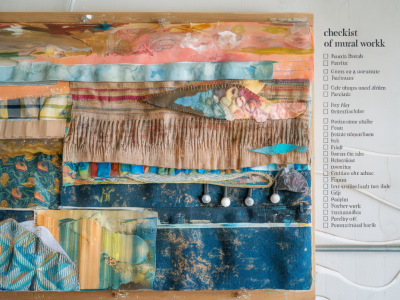
Images are often the decisive factor. Curators look at quick thumbnails, so your visuals must read clearly at small sizes. I always include three types of images:
- Anchor image: one clear image that best represents the proposed aesthetic (well-lit, uncluttered).
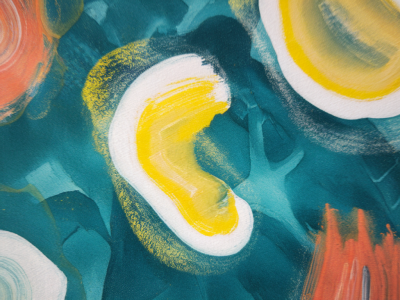
- Detail image: a close-up showing material, surface, or technique.
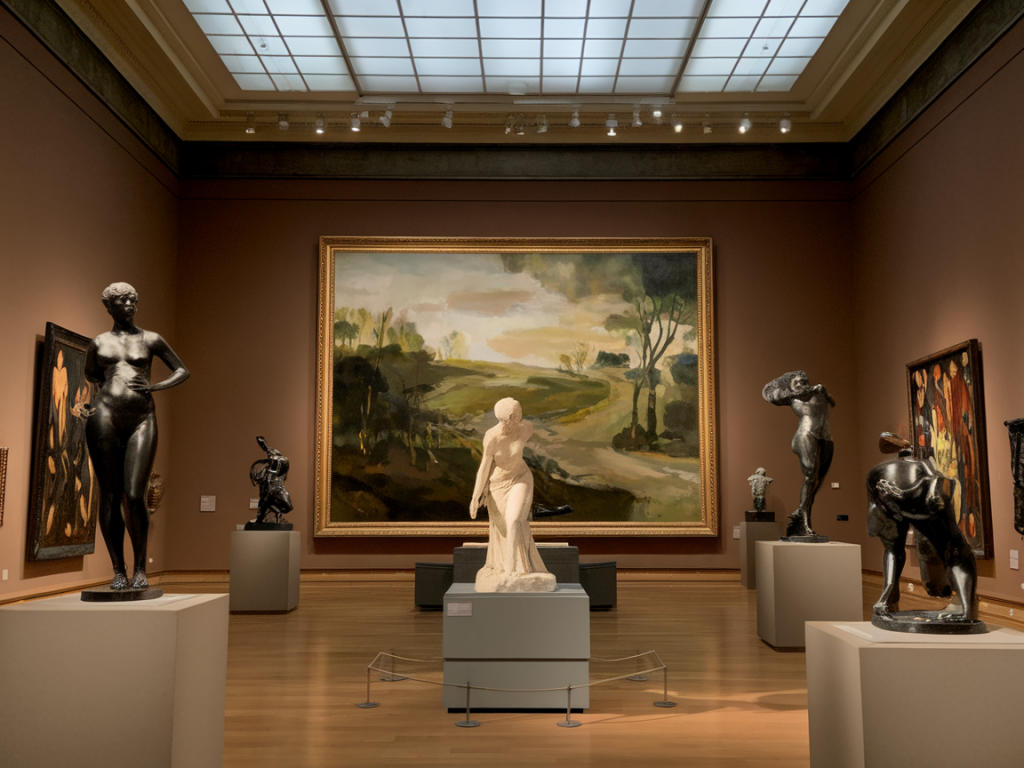
- Context image: work in a space or a mock-up showing scale and installation concept.
Image captions should be mini-elevator pitches: title, year, materials, dimensions, and one line linking the piece to the proposal. For example:
"Scrap Map, 2023 — gouache, collage, stitched paper, 40 x 60 cm. Detail shows layered maps and repurposed signage that inform the proposed site-specific installation."
Technical image specs
| Spec | Recommendation |
|---|---|
| File type | High-quality JPEG or PNG (JPEG preferred) |
| Resolution | 72–150 dpi for upload; keep a 300 dpi TIFF or JPEG for press if requested |
| Pixel dimensions | 1200–2000 px on the longest side |
| File size | Under 5 MB each for most submission systems |
| Colour | sRGB (web standard) |
Use descriptive filenames: avoid "IMG_1234.jpg". I rename files like lastname_title_year.jpg or martin_scrapmap_2023.jpg so curators can file quickly.
Mock-ups and plans
When applying for site-specific briefs, include a simple mock-up or collage to show intent. It can be a scaled plan, a photo with drawn overlays, or a 3D sketch. I keep these images minimal — a single annotated photo often communicates better than a lengthy narrative.
Budget and timeline — be realistic
Even for unpaid exhibitions, show you've thought about practicalities. A short budget (line items for materials, fabrication, transport, installation help) signals professionalism. Include a timeline with key milestones: fabrication, install, opening, deinstall. Keep contingencies — a 10% buffer for costs and an extra week for unexpected delays.
Common mistakes to avoid
- Submitting poor-quality images or inconsistent aspect ratios that make your portfolio look messy.
- Generic statements that don't address the brief or the venue.
- Overly long proposals; use white space and bullets so curators can scan quickly.
- Not clarifying scale — small works shown without context often get overlooked.
- Forgetting accessibility and risk assessments when the work involves public interaction.
Sample short-text proposal
"Proposal: 'Fragments of Industry' — a three-part wall installation that reclaims industrial signage and reclaimed papers to map the social histories of [venue]. Using collage, gouache and stitched assemblage (each panel 120 x 90 cm), the work will be installed across the main gallery wall as a narrative sequence. The panels respond directly to the site's archival maps and will be accompanied by short caption texts to invite visitor reflection. Fabrication will be completed over six weeks; installation will be achieved with two assistants and the venue's hanging system. Estimated budget: £1,200 (materials £600; fabrication assistance £400; transport £200)."
Final checklist before submission
- Have I answered the brief and used language from it where appropriate?
- Are my images clearly labelled and optimised?
- Is my concept obvious in one sentence?
- Do I show practical knowledge of budget and timeline?
- Does my application respect the curator’s stated priorities (accessibility, sustainability, etc.)?
Applying to curator-led open calls is part craft, part translation: you must translate the heart of your practice into a form that curators can rapidly understand and imagine in their spaces. Keep your writing plain, your images sharp, and your logistics believable — those things build trust and make your work easier to champion. If you'd like, I can review a draft proposal or two — send them over and we can tighten wording and image captions to make each submission sing.