I recently switched the bulk of my underpainting work to Schmincke Horadam Gouache and ran a controlled studio test to see how it performs when layered for mixed-media pieces. I wanted to know whether that particular brand truly made a practical difference — not just in colour or finish, but in how it affects adhesion, reactivation, and the final visual depth when combined with acrylics, inks, collage and wax. Here are the notes, observations and step-by-step methods from that test. I hope they help you decide whether a similar switch is worth trying in your practice.
Why test gouache specifically for underpainting?
Gouache is often praised for its flat, opaque matt finish and rapid drying time. For me, underpainting needs to do three things: build a tonal foundation, remain stable under subsequent layers, and contribute to the visual harmony of the finished piece. Many mixed-media approaches use acrylics for underpainting because they’re reliable and non-reactive, but I wanted to explore whether a high-quality gouache like Schmincke could offer benefits: readable brush marks, subtle reactivation (useful for edges), and a different optical depth when combined with translucent media.
The controlled test setup
To keep the experiment useful and repeatable, I kept variables clear and consistent:
First impressions: handling and mark-making
Schmincke gouache felt delightfully buttery. Even at thinned washes it retained a richness that acrylics did not mimic. Brush marks flatten but remain readable, which I value when I want the underpainting to inform the top layers visually. Where I used a mop brush to lay broad washes, the edges softened beautifully without creating a streaky skin that sometimes happens with cheap gouache or overly reticulated acrylic layers.
Drying, reactivation and stability
Two behaviours are often at odds: reactivation and stability. I want some reactivation for blending, but not so much that previous layers bleed when I add an ink wash.
Findings:
Adhesion tests with mixed-media layers
I applied identical sequences of ink, acrylic glazes, oil pastel and a thin cold-wax/pigment layer to both gouache and acrylic underpaintings. To test adhesion I did light abrasion (soft eraser), gentle scraping with a palette knife and a small burnishing test.
| Top Layer | Over Schmincke Gouache | Over Golden Acrylic |
|---|---|---|
| Acrylic glaze | Good adhesion; no visible delamination | Excellent adhesion; seamless |
| Acrylic ink wash | Minor reactivation at edges if heavily sprayed; otherwise stable | Stable; no reactivation |
| Oil pastel (layered, not mixed) | Adhered well; slightly more tooth on paper allowed pastels to sit nicely | Adhered well; flatter surface felt slightly less toothy |
| Cold wax/pigment | Bonded well; some colour shift where wax mixed into slightly absorbent gouache | Bonded well; very even distribution |
Visual outcomes: depth, colour and texture
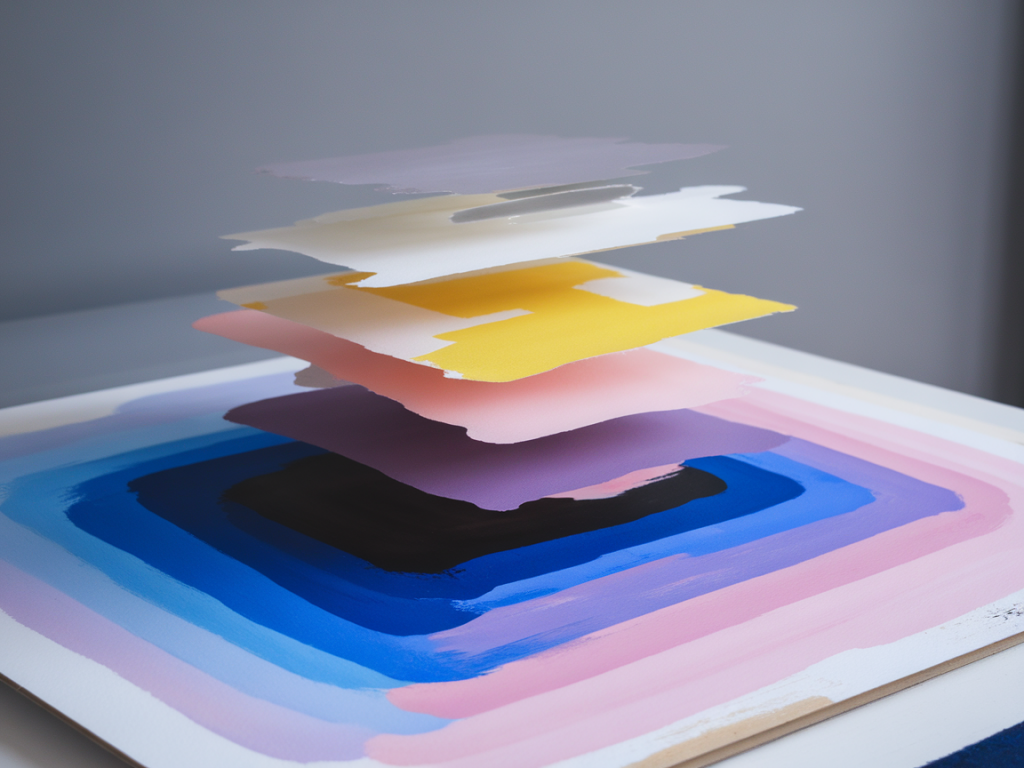
Where the gouache underpaintings performed best was in optical depth. Because Schmincke provides an opaque matt field with soft edges, subsequent glazes and translucent inks created a luminous layering effect. The underpainted tones subtly modified the warmth/coolness of glazes without reading as a separate, disruptive layer.
On the other hand, acrylic underpainting produced a flatter, more consistent base that can be useful if you want crisp top layers and precise edges. The choice comes down to whether you prefer a slightly more painterly base (gouache) or a rigid structural base (acrylic).
Practical tips from the test
Workflows that benefited most
The Schmincke switch made the most impact in these approaches:
When I’d still choose acrylic
If I’m preparing surfaces for heavy varnish, large-scale murals or highly textured impasto work, I tend to reach for acrylics. They’re less sensitive to moisture, allow more aggressive scraping, and are fully compatible with many varnish systems.
Materials list and quick recipe
Here's what I used and a simple underpainting recipe you can try:
Underpainting recipe (thin wash to semi-opaque): mix Neutral Tint with a touch of Naples Yellow for warmer greys; dilute with water to a milk-like consistency for large washes, or keep slightly thicker for brushwork. Lay down broad planes, allow to dry overnight, then proceed with translucent inks and small passages of oil pastel. If you need a non-reactive surface, apply a thin coat of gloss or satin acrylic medium once dry.
I’m still exploring variations — experimenting with different papers, adding gum arabic to alter rewetting behaviour, and testing longer-term archival behaviour — but the controlled tests convinced me that Schmincke gouache is a valuable tool for underpainting in mixed-media layering. It’s not a universal replacement for acrylics, but it offers a set of tactile and optical benefits that have reshaped how I start a painting.