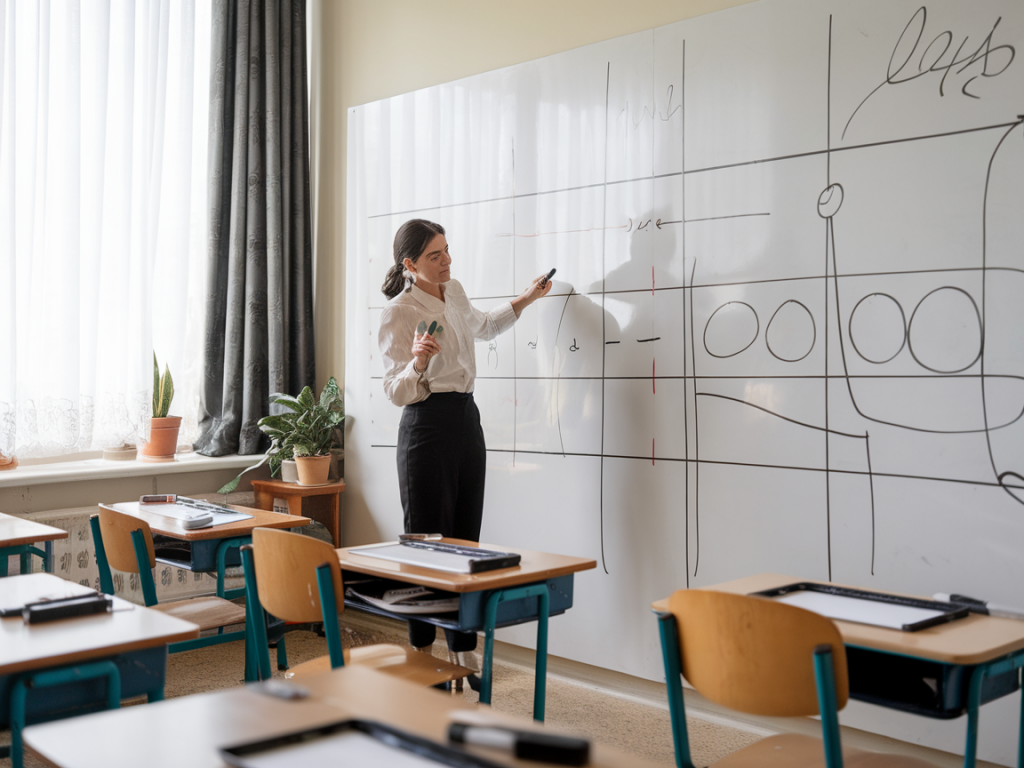
When I teach mark-making to beginners, I aim to create an atmosphere where experimentation feels safe, playful and deliberately low-stakes. Mark-making is about decision-making: line, pressure, speed, tool choice and surface. My goal is to help students move from hesitation to curiosity — to try marks without worrying about 'getting it right'. Below are three classroom exercises that I use regularly. They work for mixed groups (adults or children), require minimal materials and scale well from a single session to a longer unit.
Setting up: materials, space and mindset
Before we begin, a quick note on preparation. I keep equipment simple and tactile: quality paper (heavyweight cartridge or mixed-media paper), a selection of drawing implements, and surfaces to tape or clamp the sheets to. Here’s a basic materials table I often share with students:
| Category | Examples |
|---|---|
| Paper | 250–300gsm cartridge paper, newsprint for warm-ups |
| Dry tools | HB–4B pencils, graphite sticks, charcoal, compressed charcoal |
| Wet tools | India ink, diluted acrylic ink, waterbrushes, toothbrush |
| Impromptu tools | Cardboard, combs, sponges, feathers, credit card, bubble wrap |
| Extras | Masking tape, jars for water, aprons, wipes |
Two practical points: first, tape the paper down — it gives students permission to use vigorous marks without worrying about buckling. Second, emphasise *process not product*; display student experiments on the wall as 'research' rather than final work. That sends a powerful message: marks are data.
Exercise 1 — The Gesture Map (15–25 minutes): loosen up and observe
This is my go-to warm-up. It teaches students to translate movement into marks and to be more attuned to line quality. I ask them to think of their arm and shoulder as a pen-holder rather than relying on wrist-only movement.
How I run it:
- Give each student a large sheet of paper (A2 if possible) and a soft pencil or charcoal stick.
- Set a timer for 90 seconds. In that time, students make one continuous mark-driven 'gesture' across the page — no lifting the tool.
- Repeat 4–6 times, changing the focus each round: one round for speed, one for varying pressure, one for controlled curves, one for angular shapes.
- After a few rounds, ask students to pick three gestures they like and annotate them: note the movement, pressure, and emotion behind the mark.
Why it works: The time constraint removes self-criticism and encourages spontaneous marks. Annotation trains observation — students start to use language like 'scratchy', 'flowing', 'staccato', which helps later critique.
Exercise 2 — Tool Swap Relay (30–40 minutes): discover marks through constraints
This group exercise is playful and energising. Students form small teams or pairs; each station has a different tool or tool-combination. The constraint of limited time and varying tools forces creative problem-solving.
Station ideas (rotate every 5–7 minutes):
- Toothbrush dipped in diluted ink for splatter and hair-like marks.
- Credit card/buffer scraping through wet acrylic or gouache for hard-edged lines.
- Feather or twig for delicate, unpredictable strokes.
- Palette knife and printing ink for thick impasto marks.
- Comb, bubble wrap or corrugated cardboard pressed into wet paint for texture.
How I run it:
- Students rotate through stations, producing a small sheet or section of marks at each stop.
- Encourage layering: when returning to a previous station, experiment by overlaying a different mark.
- End with a group-sharing moment where each team explains one surprising mark they discovered.
Practical tips: Use inexpensive inks (e.g., Daler-Rowney FW inks or Pebeo Drawing Gum for resist effects) and pre-mixed acrylics to minimise mud. For messy stations, put down trays or plastic sheets and provide gloves if needed.
Exercise 3 — The Storyboard of Marks (45–60 minutes): connect mark-making to narrative
This is my favourite for developing meaning. I ask students to think of a short story fragment — it can be as simple as 'a rainstorm in a city' or 'a quiet kitchen at dawn'. The task is to build a small panel sequence (3–6 panels) where each panel is an exploration of mark language to represent an element of that story: rhythm, texture, density, silence.
Step-by-step:
- Give each student a strip of paper divided into 4 panels (or use postcards).
- Ask them to list 4 sensory words related to their fragment (e.g., 'pitter', 'clatter', 'gloss', 'hush').
- Assign each word to a panel and choose a primary tool for each panel.
- Work in layers: begin with a base mark (broad brush, diluted wash), then add counter-marks (pen, scratching, erasure, collage).
- Encourage restraint — sometimes one strong mark in an otherwise quiet panel is more effective than filling the space.
Why narrative helps: Linking marks to sensory words grounds abstraction with intention. Students often surprise themselves by translating 'hush' into a near-empty panel with faint graphite smudges, or 'clatter' into sharp, overlapping ink strokes.
Sharing, critique and next steps
After exercises I always run a short critique that's framed as discovery. I ask students to tell the group what they learned about a particular mark rather than judge their own work. Useful prompts include:
- "Which mark surprised you and why?"
- "How did changing pressure or speed affect the result?"
- "Which mark would you keep in your practice and how might you use it?"
For students who want to continue at home, I recommend keeping a 'mark diary': a small sketchbook where they try one new tool or constraint per page. Brands like Seawhite sketchbooks or Stillman & Birn are reliable for mixed media. Encourage photographing results — a phone camera reveals textures and contrasts that aren't obvious at arm's length.
Troubleshooting common issues
Problem: "My students are scared of making bad marks." Response: Normalize 'failed' experiments by showing your own discarded sheets. Do a demonstration where you deliberately make 'ugly' marks and then layer over them — often they become interesting.
Problem: "Some students keep repeating the same safe mark." Response: Use constraint cards: students draw a card that forces a new variable (e.g., "use non-dominant hand", "no line allowed, only texture", "make five marks only"). Constraints open creative pathways.
Problem: "Materials run out." Response: Many great marks come from found objects — leaves, cardboard, cling film. I once ran a whole workshop using only recycled packaging and a single pot of poster paint.
Teaching mark-making is about cultivating curiosity. If you make the room a laboratory where risk is encouraged and observation is central, students will begin to speak fluently through marks. These three exercises provide structure but are intentionally flexible — tweak timings, tools and prompts to suit your group. Most importantly, have fun making strange, stubborn, beautiful marks together.