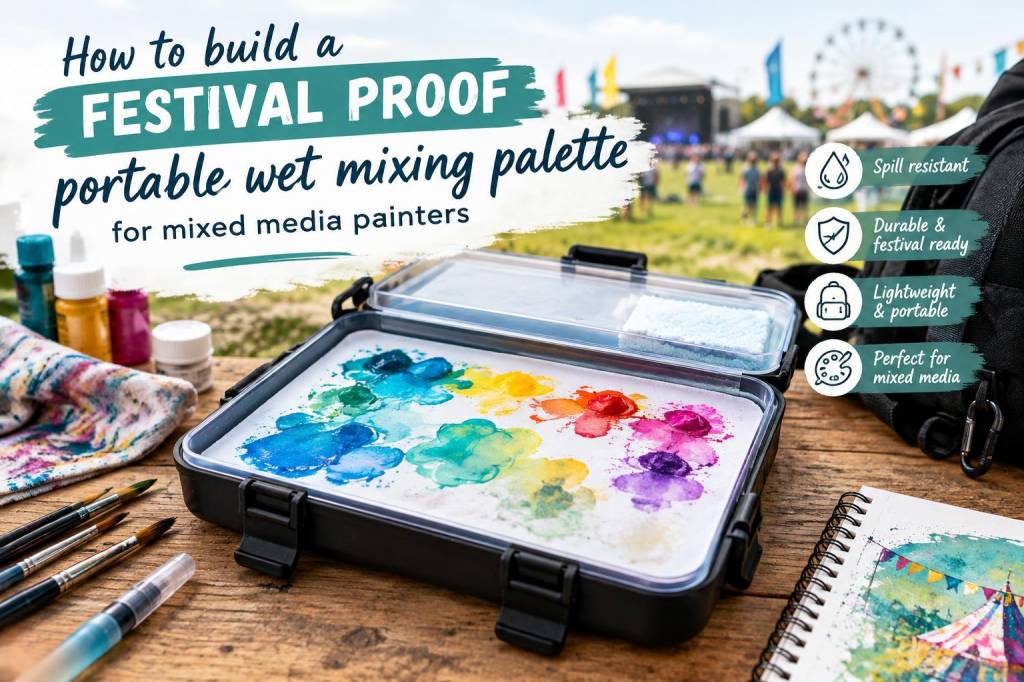
I’ve spent many summers painting outdoors at busy arts festivals, learning quickly that a studio wet palette simply doesn’t cut it when there’s dust, wind and a queue of curious visitors. Over time I developed a compact, festival-proof wet-mixing palette setup that keeps paints workable for...
Oct 07, 2026
• by Éloïse Martin
Latest News from Sonriseartists Co
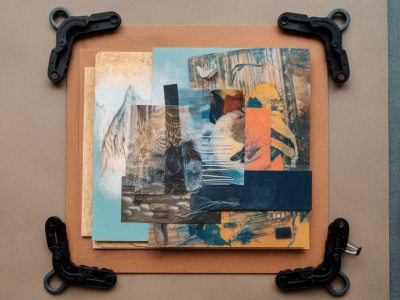
I’m often asked how I send fragile mixed-media pieces to galleries, buyers or events without returning to my studio with a heart in my mouth. Over the years I’ve developed a repeatable method for building a transport-safe portfolio that protects delicate surfaces and layered edges using archival board, corner clamps and a few practical tricks. Below I’ll walk you through the materials I...
Read more...
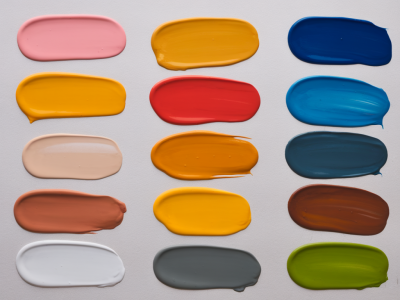
Why I wanted to test gouache with soft-body acrylicsI've long loved the matt, opaque quality of Schmincke Horadam Gouache for figure work and layered illustration. At the same time, Liquitex Soft Body Acrylics are a staple in my studio for their flow and permanence. Recently I found myself wondering: can these two live together in a single wet layer? Could I lay a gouache mark and paint over it...
Read more...
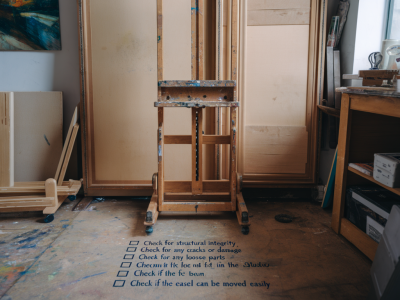
When my studio shrank from a sunny spare room to a cosy corner in a shared flat, one of the hardest things was fitting my working kit into a smaller footprint. A full-size studio easel felt like a luxury I couldn’t justify—until I found a secondhand French easel at a local auction. It wasn’t perfect, but with a little attention it became exactly what I needed. If you’re juggling limited...
Read more...
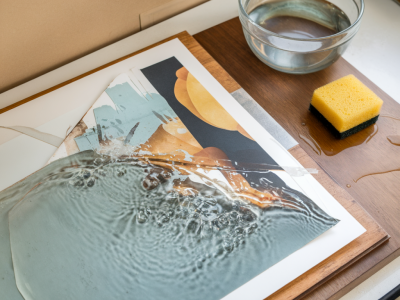
I once rescued a small pile of collage works that had been exposed to a leaking roof after a storm. They were damp, cockled and stained with a faint ring of salty residue where contaminated rainwater had evaporated. I didn’t have access to a conservation lab, but I wanted to stabilise them so I could frame and enjoy them without causing further damage. The methods I outline below are practical,...
Read more...

I keep my brush-cleaning setup intentionally small and solvent-free — partly because my studio is compact, partly because I like rituals that are slow and sensory, and partly because I want to protect my natural-hair brushes from harsh chemicals. Over the years I’ve refined a kit and a routine that removes oil paint effectively, preserves both sable and hog bristle sets as well as modern...
Read more...
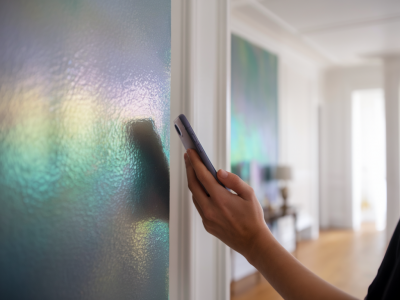
I spent a rainy afternoon last week photographing a new series that uses iridescent powders and interference pigments layered across gouache and collage. The shimmer was beautiful in person, but on my phone screen the highlights turned into blown-out white patches that flattened all the colour shift I’d worked for. After a few rounds of trial and error with LED panels, diffusers and phone...
Read more...
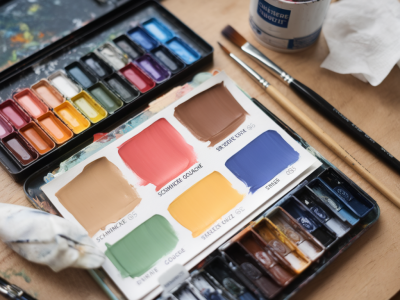
I remember the first time I decided to use gouache as an underpainting in a mixed‑media piece: I wanted the tonal clarity of a waterbased wash but also the ability to repaint and layer without muddying. The result taught me a lot about the differences between student and artist‑grade gouaches — not just in colour and finish, but in longevity, re‑wetting behaviour and how they survive...
Read more...
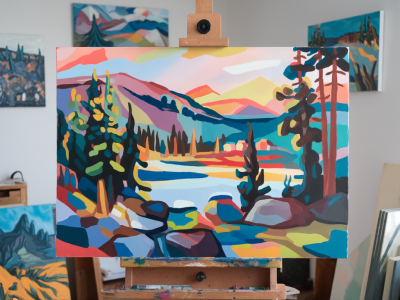
I often use gouache as an underpainting when I want my acrylic highlights to sing: the matte, velvety base of gouache gives a colour depth and immediacy that acrylics alone sometimes lack. Over the years I've developed a repeatable, studio-friendly workflow that works with both high-end paints (I reach for Schmincke when I want maximum pigment strength and mixing reliability) and more affordable...
Read more...
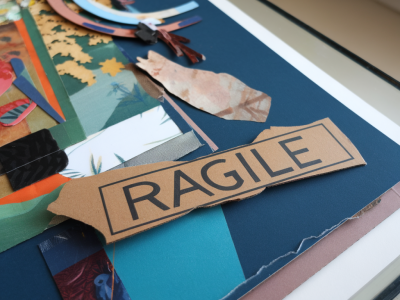
I ship a lot of collage work — small studies, commission pieces and fragile mixed‑media experiments — and over the years I’ve learned the hard way that exposed torn or layered edges are the most vulnerable part of a piece. One knock in transit, a sweaty day in a van, or an overzealous courier can lift a fragment, crease a thin paper tongue or crush a corner. I now treat edge stabilisation...
Read more...
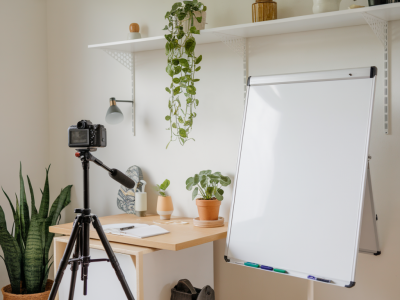
Turning a tiny corner of my studio into a portable live‑teaching setup was one of the best investments I’ve made in my practice. I wanted something compact that I could pack away between classes, quick to set up before a demo, and versatile enough to teach in person or stream online. Over several semesters of workshops and streamed demos for Sonriseartists, I refined an approach that balances...
Read more...