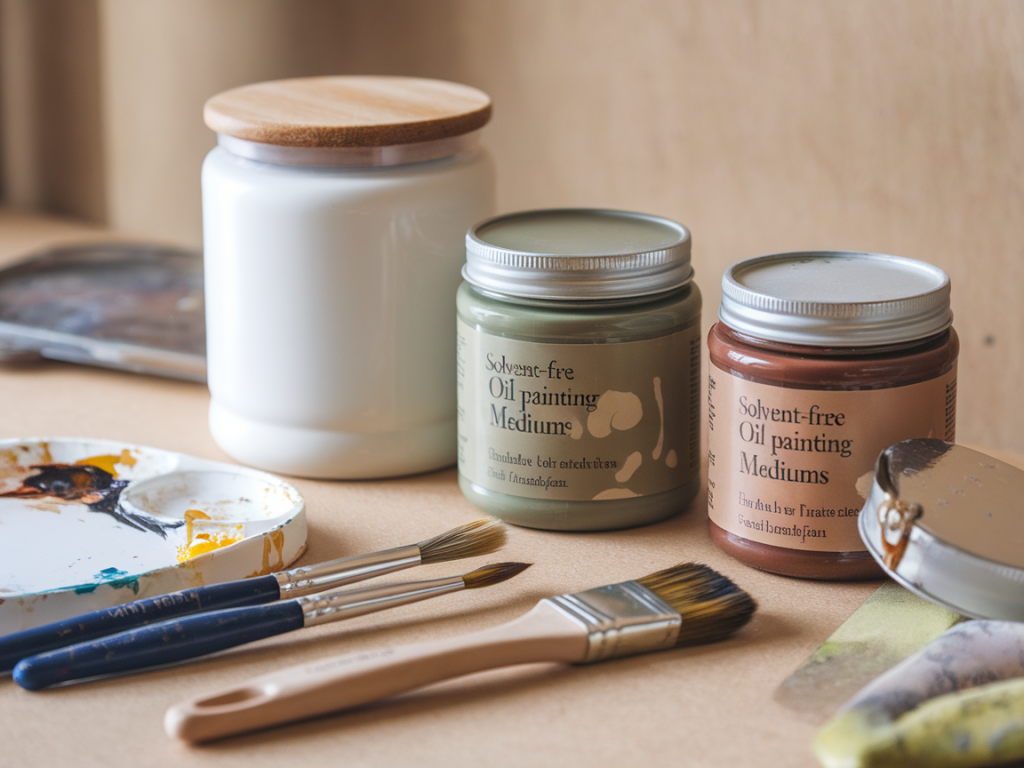
I switched to solvent-free oil painting mediums a few years ago and, like many painters, I worried about losing the handling qualities and drying behaviour I relied on. What surprised me was how small adjustments — a little warmed linseed, a touch of alkyd resin, a dash of natural dryers — can recreate the familiar buttery feel and keep reasonable drying times without the need for turpentine or mineral spirits. Below I share three practical, solvent-free recipes I've tested in the studio, along with notes on how I use them, their pros and cons, and tips for safety and storage.
Why go solvent-free?
My decision came from a mix of health, studio and environmental reasons. Solvents like turpentine can irritate the skin, eyes and respiratory system, and long-term exposure is something I’ve seen affect visiting artists and students. Studio ventilation in a home setting is rarely ideal. Choosing solvent-free alternatives doesn’t mean sacrificing paint quality — it means adapting recipes and technique to work with oil mediums that are safer to handle in small, well-ventilated spaces.
That said, “solvent-free” in this context refers to formulations I've used that avoid added mineral spirits or turpentine. Many include oil-modifying resins, higher-viscosity oils, and natural additives. If you’re chemically sensitive, always check product labels and test a small amount first.
How I approach making a medium
When I mix a medium I think about three qualities: 1) flow and wetness (how the paint moves), 2) gloss and leveling (surface finish), and 3) drying time (how quickly it skins over and is safe to glaze). To maintain familiar handling I often combine a fast-drying component (alkyd or stand oil) with a more traditional oil (cold-pressed linseed or walnut). I also use small amounts of sunflower or safflower when I want less yellowing.
All proportions below are by volume. Work with pipettes, small glass jars and stainless scoops. Label jars with date and contents. Keep mixtures in a cool, dark place — many homemade mediums remain stable for months but can darken or thicken over time.
Recipe 1 — Fast-handling glazing medium (alkyd-based, solvent-free)
This is my go-to when I want quick tack-free times for glazing layers but still want a smooth, flowing medium that doesn't feel gummy.
Usage notes:
Recipe 2 — Traditional feel, faster drying (stand oil + siccative)
For a painter who likes the hand of pure oil but needs improved drying, this is my compromise — using stand oil for smoothness and a natural siccative (not solvent-diluted) to encourage safe oxidation.
Usage notes:
Recipe 3 — “Fat-over-lean” solvent-free alla prima medium
When I paint alla prima and want the paint to move and blend like a traditional solvent-thinned mix, I combine a natural oil with a vegetable-based ester to reduce tackiness without using solvents.
Usage notes:
Practical tips and safety
Comparative snapshot
| Quality | Alkyd-based medium | Stand oil + siccative | Vegetable-ester alla prima |
| Handling | Fluid, smooth | Enamel, less brushmarks | Buttery, blendable |
| Drying speed | Fast (1–3 days touch) | Moderate (3–7 days) | Moderate-slow (5–10 days) |
| Gloss | High | High | Medium |
| Yellowing risk | Medium | Medium-High (stand oil) | Lower (walnut) |
Brands and products I recommend trying
I often reach for known artist-quality products: Winsor & Newton Artisan Alkyd Medium (for solvent-free alkyd options), Williamsburg or Gamblin’s alkyd mediums, and stand oils from Gamblin or Sennelier. For solvent-free modifiers look for products labeled “low odour” or “solvent-free alkyd” and always read technical data sheets for VOC content.
Finally, remember that changing medium can require small adjustments to technique: brush loading, layering rhythm and varnishing schedule. Keep a swatch card for each medium combination — I pin mine to the studio wall — so you can compare how glazes, impasto and thin washes behave over time. Trying these recipes will let you keep the handling and drying times you like while reducing solvent use and making your studio a gentler place to work.