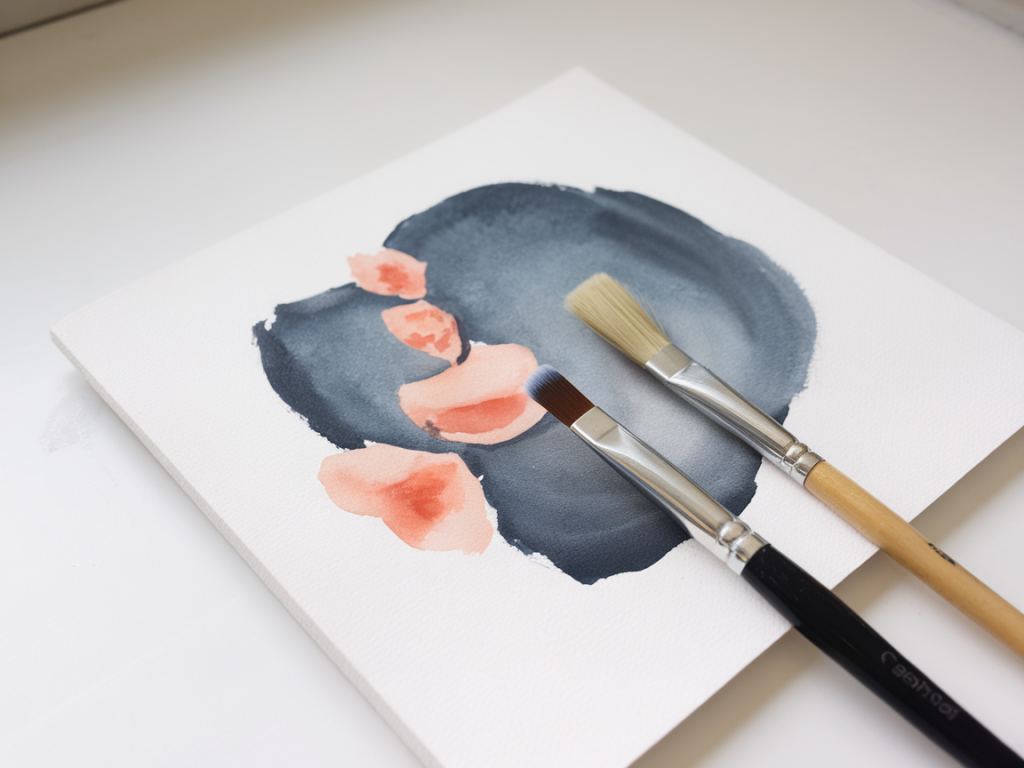
I’ve been asked more times than I can count: “Can I swap synthetic brushes for natural-hair when working in gouache?” It’s a great question, especially as gouache sits somewhere between transparent watercolor and opaque acrylic in its behaviour. I decided to run a practical test in my studio to answer it properly — not just theoretical pros and cons, but how the brushes actually perform, how they hold and release gouache, and what maintenance they require so you don’t shorten the life of an expensive natural-hair brush.
Why the question matters
Gouache is water-based but often used more opaquely and with heavier pigment load than watercolor. That means brushes are subjected to thicker paint, more frequent rewetting, and sometimes more scrubbing. Synthetic brushes have become popular because they’re cheaper, resilient and easy to clean. Natural-hair brushes — sable, squirrel, kolinsky, goat — are prized for their spring, softness and ability to hold a lot of liquid. But are they practical for gouache, or will they get ruined quickly?
My test: what I tried and why
I selected three common brush types I already use in the studio:
I worked on Arches cold press paper and a smooth hot-pressed cartridge paper to see how surface texture affected wear. My paint choices were three gouache brands I use regularly: Winsor & Newton Designers’, Schmincke Horadam, and Holbein Artists’ Gouache. I used the same palette of opaque colours and mixed thicker buttery mixes and more diluted washes.
Test criteria:
What I found
Paint pickup: Natural-hair brushes, especially the sable and goat mop, held more fluid and paint than the synthetic in a single load. The goat mop in particular absorbed a good deal of pigment and returned very soft, velvety washes. Sable gave a lovely, precise pickup for smaller rounds.
Holding capacity: Sable held enough to lay down clean, controlled opaque strokes without frequent reloading. The synthetic needed reloading more often, especially with thicker gouache mixes. For quick, gestural marks, that’s not a problem, but for longer hairlines or larger filled areas it became tiresome.
Release and stroke quality: This is where natural hair shone. Sable produced crisp lines and a responsive tip; the goat mop made gloriously smooth soft blends and was forgiving on surface texture. The synthetic gave nice marks, but the edges were slightly less nuanced — still perfectly acceptable for many illustration and blocking-in tasks.
Resilience: After prolonged work, the sable retained spring better than the synthetic. The synthetic’s bristles tended to splay slightly faster when I used a lot of scrubbing for texture. The goat mop naturally has less spring, which is expected.
Cleaning and maintenance: This is the crucial point. Natural hair took more effort to clean. Gouache dries water-soluble, but once pigment sinks into hair and dries repeatedly, it can be stubborn. On the first session, I could clean the sable back to good shape with warm water, mild soap (I use Masters’ Brush Cleaner) and gentle reshaping. After two sessions of leaving gouache to dry in the hair, however, the sable and goat showed some staining and slight matting, especially with the darker pigments (Prussian blue, Payne’s grey). The synthetic rinsed out quickly and returned to shape with minimal fuss.
Practical maintenance plan (step-by-step)
If you want to use natural-hair brushes with gouache, here’s a routine that kept my sable and goat brushes working well over a few weeks of regular use:
Quick reference: pros and cons
| Type | Pros | Cons |
|---|---|---|
| Synthetic | Inexpensive, durable, easy to clean, good for heavy scrubbing | Less liquid capacity, slightly less spring for fine lines |
| Sable | Excellent point and spring, holds paint well, great for detail | Expensive, needs careful cleaning to prevent staining and matting |
| Goat mop | Fantastic for soft washes and blends, excellent absorption | Low spring, heavy maintenance, not ideal for fine lines |
Brands and models I recommend
If you’re curious about trying natural hair, these performed well for me:
Final thoughts (practical guidance)
Yes — you can swap synthetic brushes for natural-hair in gouache, but it depends on your working method and how much maintenance you’re willing to do. If you paint fast, layer often, and don’t want to fuss much, synthetics will give you reliable, low-maintenance results. If you value subtlety of stroke, point, and the ability to hold a lot of paint for controlled marks or feathered washes, natural-hair brushes reward you with superior feel — provided you commit to careful cleaning and storage.
In my practice I often keep both: synthetics for priming, scrubbing and heavy blocking-in; sable for precision, glazing and polished edges; and a goat mop for those soft atmospheric washes that make gouache sing. Having this mix gives flexibility without constantly risking my nicer brushes.