When my studio shrank from a sunny spare room to a cosy corner in a shared flat, one of the hardest things was fitting my working kit into a smaller footprint. A full-size studio easel felt like a luxury I couldn’t justify—until I found a secondhand French easel at a local auction. It wasn’t perfect, but with a little attention it became exactly what I needed. If you’re juggling limited studio space and uneven floors, buying pre-loved can be a brilliant, budget-friendly option—provided you know what to ask before you hand over your cash.
Ask about the easel’s footprint and folded dimensions
Space is the biggest constraint for many of us. Before you arrange a viewing, ask for the easel’s exact dimensions when it’s set up and when it’s folded or collapsed. Some easels look compact in photos but still require more clearance than your doorway or storage nook allows.
- Will it fit through your studio door or up the stairs? Measure doorways and corridors before you visit.
- How wide is the base? For limited floor space, an easel with a narrow footprint or folding tripod legs is preferable.
- Can the easel be fully folded and stored upright behind furniture or under a bed?
Check stability on uneven floors
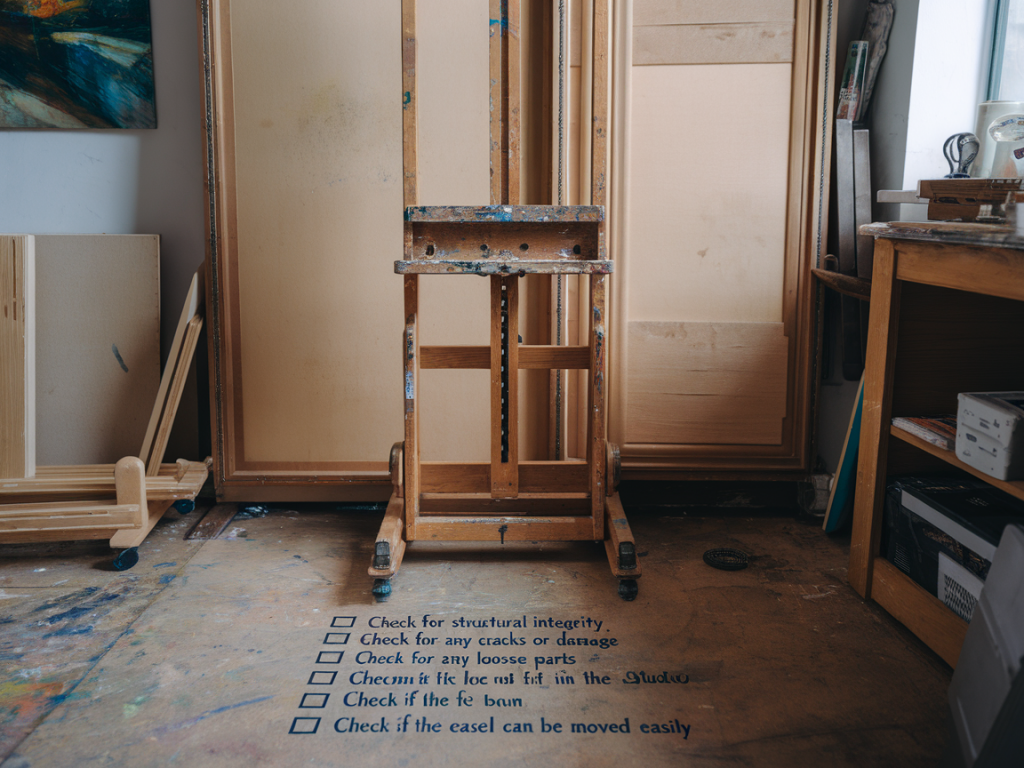
Uneven floors are common in older houses and flats. Stability should be non-negotiable—you don’t want your easel wobbling while you work. I always ask:
- Does it have adjustable feet or screw-levelers? These are lifesavers on uneven boards.
- Are the legs solidly constructed or are they worn and loose at the joints?
- Can the legs lock securely into position?
If the seller can’t test it on an uneven surface, ask if they’ve used it on one recently. Manufacturers like Mabef and H-frame easel makers often include robust screw feet; French easels sometimes have leather or metal feet that can be replaced or fitted with rubber caps for better grip.
Inspect the condition of moving parts and hardware
Mechanisms are where secondhand easels often show their age. Loose screws, stripped threads and seized ratchets can be fixed, but they might affect the price. Key questions:
- Does the easel tilt and lock smoothly? Check all angles and positions.
- Are the clamps, screws and gears present and functional? Look for rust, cross-threading or missing washers.
- Has the easel been repainted or repaired? Cosmetic fixes can hide structural issues.
Material and build quality — wood, metal, hybrids
Different materials have different trade-offs. Ask about the primary construction material and what that means for weight, longevity and aesthetics.
- Solid beech/ash wood (e.g. Mabef, Winsor & Newton studio easels): warm, stable, heavy—great for fixed studios but harder to move.
- Aluminium/steel (e.g. Schmincke, some Pro-line tripods): lighter, often adjustable feet, but can be less charming visually.
- Compact folding “French” easel: excellent for storage and plein air, but check the internal storage boxes and hinges.
Compatibility with canvases, panels and painting sizes
Think about the largest and smallest supports you plan to use.
- What’s the maximum canvas height and width the easel will accommodate?
- Is there a removable support for working low or close to a wall?
- Can it hold heavy, stretched canvases or chunky framed panels? If you paint in mixed media with heavier boards, ensure the easel can cope.
Portability, storage and transport
For limited studios, an easel that can be stowed away or easily transported is attractive. Ask:
- How much does it weigh? Can you lift it alone up/down stairs?
- Does it fold flat enough to stand in a cupboard or behind a sofa?
- Are its removable parts easy to detach for moving?
What to bring when you view an easel
Turn a potentially awkward viewing into a realistic test of suitability by bringing a few simple items.
- A tape measure (for doorways and storage spaces).
- A small board or canvas similar in size and weight to what you usually use.
- A level (or a smartphone with a level app) to check whether the easel sits true on the floor.
- Comfortable shoes—navigate the seller’s stairs or uneven ground confidently.
Questions to ask the seller
Don’t be shy—most sellers will respect detailed questions because it shows you’re a serious buyer. Ask:
- How long have you owned it and how often was it used?
- Why are you selling it? (This can reveal hidden issues or recent upgrades.)
- Has it ever been repaired professionally?
- Are there any spare parts included (extra screws, canvas supports, pegs)?
- Can you take it for a short test setup in your space?
Price, negotiation and value
Do some market research before you haggle. Look at similar models on Gumtree, eBay and local Facebook groups. For antiques or vintage studio easels, condition and provenance can add value; for modern makers, functionality and brand matter more.
| Type | Typical secondhand price range (UK) | Notes |
|---|---|---|
| French folding easel | £40–£250 | Great for storage; inspect box and hinges |
| Beefy studio H-easel (solid wood) | £150–£800 | Heavy but stable; look for screw feet and intact cross-braces |
| Metal adjustable tripod | £30–£200 | Lightweight and portable; check locking mechanisms |
Post-purchase tweaks and quick fixes
Even a well-loved easel often needs a few small updates. I replaced the worn rubber feet on my French easel with threaded adjustable glides for better balance on our sagging floorboards. Other easy fixes include:
- Lubricating metal threads with a light oil (avoid getting oil on wood or canvas supports).
- Replacing missing knobs with universal hardware from a DIY store.
- Sanding and recoating worn wooden parts with a clear wax or oil for protection (test a discreet area first).
- Adding a non-slip mat beneath the easel if you can’t fit adjustable feet.
Buying secondhand can be a way to bring character, quality and economy into a small studio—but only if you ask the right questions. With measurements, a quick test setup and a short checklist in hand, you’ll avoid surprises and find an easel that supports your practice rather than stealing your floor space.