I often think of “mistakes” in the studio as conversations my work invites me to have, rather than problems to be solved. Intentionally introducing slips, glitches and unexpected marks can open narrative possibilities in figurative work—hinting at memory, vulnerability, or the unspoken. Below I share practical techniques I use in painting and mixed media to weave purposeful imperfections into portraits and figurative scenes. These approaches are not about making careless errors; they’re about designing beautiful accidents that deepen story and presence.
Why introduce intentional mistakes?
When a figure is rendered with photographic exactitude, the work can feel complete but emotionally contained. A deliberate imperfection—a smeared eye, a fragment of missing anatomy, a patch of scraped paint—can suggest history, movement or an inner life that precise rendering sometimes conceals. I use “mistakes” to:
These are narrative devices. Treat them like a line of dialogue rather than a decorative flourish.
Controlled erasure and subtraction
One of my favourite gestures is erasure. It’s simple and dramatic: remove something you’ve painstakingly painted. The absence becomes a narrative cue—an erased face suggests forgetting, an obscured hand implies movement. I use a few approaches:
Tip: stop before you think you’re done. Over-erasing removes the mystery you want to keep.
Deliberate misalignment and cropping
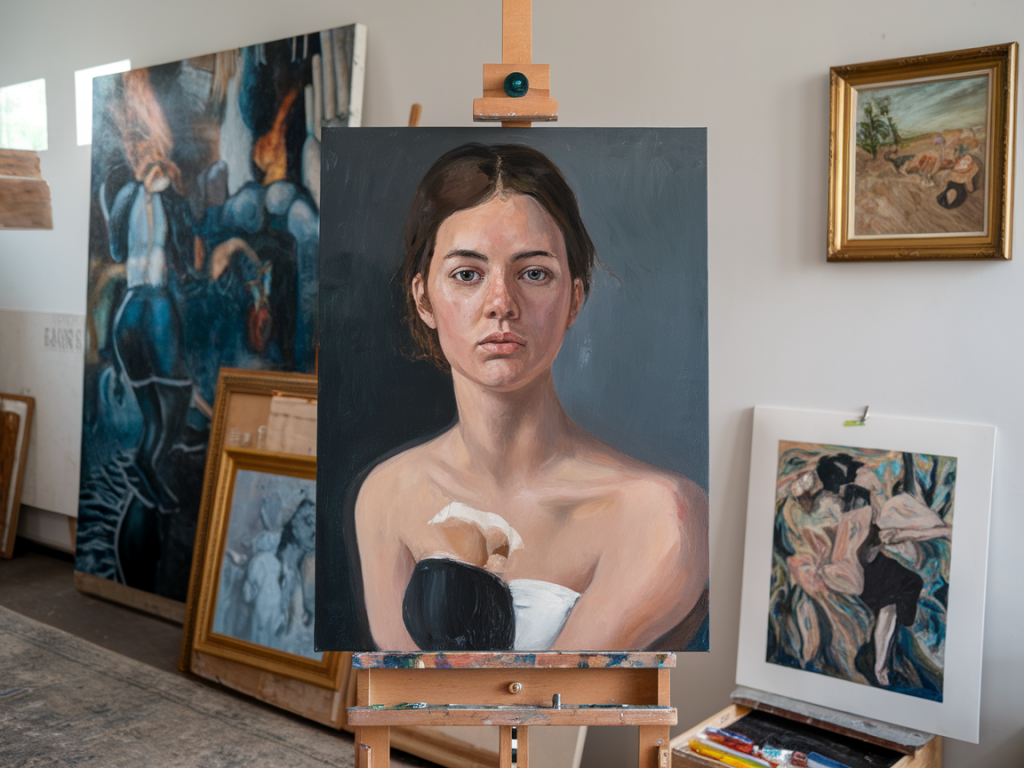
Subtly misplacing facial features or cropping anatomy can make a figure feel psychologically unsettled in a compelling way. I don’t mean cartoony distortion—think tiny shifts that whisper rather than shout.
When you do this, work slowly. A minor adjustment can read as an intentional choice; a massive displacement becomes cartoonish unless that’s your intent.
Accidental textures as memory traces
I love using household materials to imprint marks that feel like memory traces. Coffee rings, creased paper, tea stains and folded tissue can all be incorporated to suggest lived-in surfaces and worn histories.
These textures are especially effective in backgrounds or clothing, where they suggest a life beyond the figure rather than competing with a face.
Overpainting and “wrong” colours
Introducing colours that feel slightly off—or that collide with expected flesh tones—can create emotional dissonance. A blue wash across cheeks can suggest coldness, sadness, or bruising; a patch of fluorescent orange in hair can feel like a memory’s immaturity.
Layered collage and revealed underpainting
I often build a painting as a palimpsest—layering collage elements and then partially stripping them back. Old book pages, ephemera, fragments of diagrams or handwritten notes can read like backstory when they’re only partly visible.
This technique allows literal narrative artifacts to inhabit the image; they’re like memories embedded in skin and garment.
Controlled drips, runs and smudges
Drips can suggest tears, rain, or time washing away. I prepare for them rather than leaving them to chance.
Let drips interact with more controlled passages so the contrast enhances both.
Intentional smudging and finger marks
Smudging with a finger or a cloth is immediate and human. Finger marks read as the artist’s touch—literally. I sometimes use my thumb to blur an edge around an eye or a knuckle to soften tension, then resist the urge to tidy it up.
These marks are personal: they carry a trace of the maker’s body in the work, which can make the narrative feel intimate.
Leaving technical imperfections visible
Sometimes the simplest “mistake” is to show how the work was made: visible underdrawing, exposed support threads, raw canvas edges, visible tape. I deliberately leave registration marks, charcoal lines or brushloading inconsistencies rather than fussing them away. They remind the viewer this image was assembled, not conjured.
These elements can humanise and demystify, making the narrative feel accessible rather than staged.
Practical cautions and final studio habits
Intentional mistakes still require control. Some practical points I always keep in mind:
Intentional mistakes are invitations—to the viewer, to the figure, and to you as maker. They complicate easy readings and keep a painting alive. The key is to make them conversational, not arbitrary: each imperfection should carry a reason to be there, a hint of story. Try one small disruption next time you work—a smudge, a lifted scrape, a miscoloured shadow—and see what it asks you to explore.