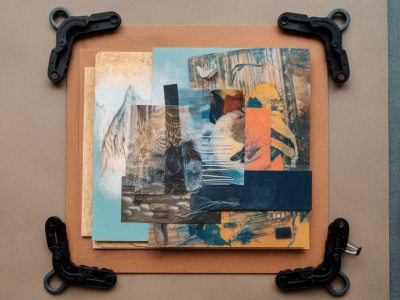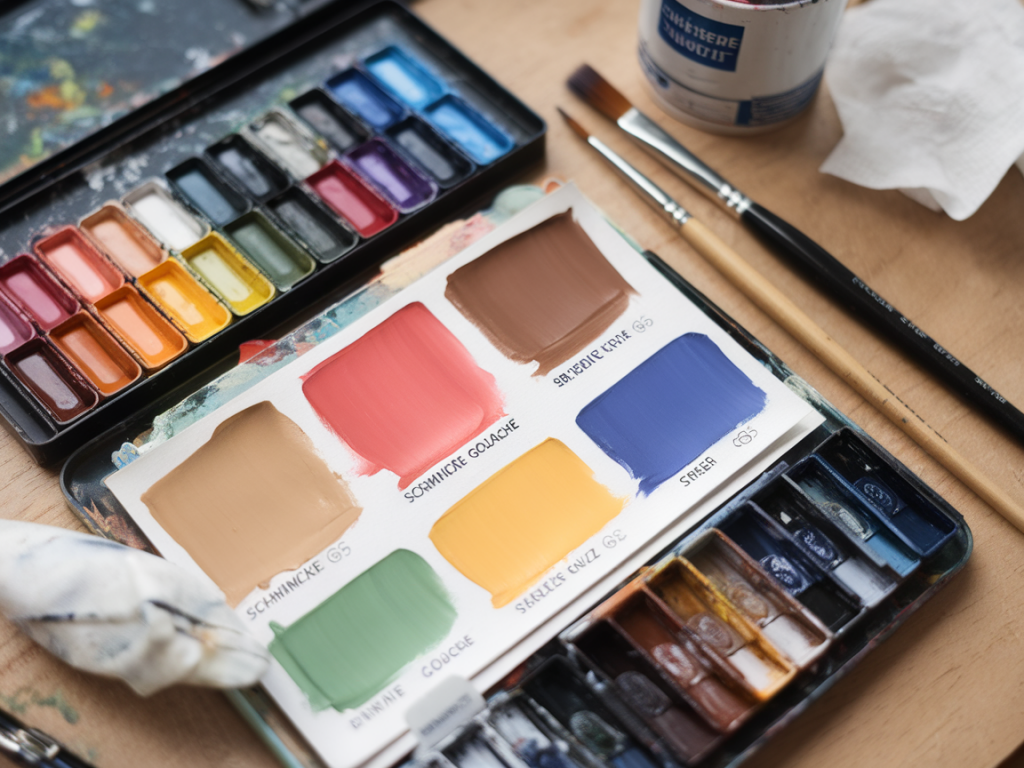
I remember the first time I decided to use gouache as an underpainting in a mixed‑media piece: I wanted the tonal clarity of a waterbased wash but also the ability to repaint and layer without muddying. The result taught me a lot about the differences between student and artist‑grade gouaches — not just in colour and finish, but in longevity, re‑wetting behaviour and how they survive being worked over with acrylics, inks and collage.
In this piece I’ll walk you through exactly when I reach for Schmincke Horadam (their artist gouache) and when a more economical student brand is perfectly fine for colourfast underpaintings in mixed‑media work. I’ll explain the practical trade‑offs — permanence, opacity, binder strength, re‑wetting, and sealing — and share testing and workflow tips that you can use straight away in the studio.
What I mean by a “colourfast underpainting”
When I talk about colourfast underpaintings I mean painted layers that are intended to remain visually stable and not shift, stain, or lift as you build further layers. In mixed media this usually means a gouache or wash that provides tone, temperature or local colour, which will then be worked over with acrylic, collage, ink or dry media. The key qualities I want from such a layer are:
Why Schmincke (Horadam) is my go‑to for permanence
I use Schmincke Horadam when permanence matters — commission work, pieces destined for exhibition or sale, or any work where I want the underpainting to remain true over time. Schmincke’s artist gouache is made with high‑quality pigments and a stronger binder system (gum arabic formulated for gouache) which delivers:
For example, I often use Schmincke for underpaintings in portrait work. The stability of the colour means that when I overlay transparent glazes of acrylic or ink the mid‑tones and skin undertones remain true rather than shifting toward muted or brownish tones, which can happen with lower‑grade pigments.
When student gouache is perfectly fine — and even preferable
Student brands (Daler‑Rowney Graduate or Schmincke Akademie, Winsor & Newton Designer’s Gouache sometimes sits between categories) have their place. They are less expensive, generally more opaque (due to higher filler content), and often quite robust for sketching, studies and experimental work. I use student gouache when:
Student paints are not a shortcut if you care about archival quality, but they are excellent for roughs, preparatory underpaintings and teaching situations. They’re also great if you want a punchy, flat area of colour that will be covered partially by collage or opaque acrylic paint.
Practical tests I always run before committing
Before I use any gouache as an underpainting that will survive further work, I run a few quick tests on scrap material — this takes ten minutes but prevents headaches later.
Substrate and sealing: as important as pigment quality
Even the best gouache will behave badly on the wrong surface. For underpaintings I favour heavyweight watercolour paper (300gsm+) or primed boards. On canvas I either size the surface with a thin acrylic gesso or I work with acrylic base layers and treat gouache as a quick tonal stage rather than a finalised underlayer.
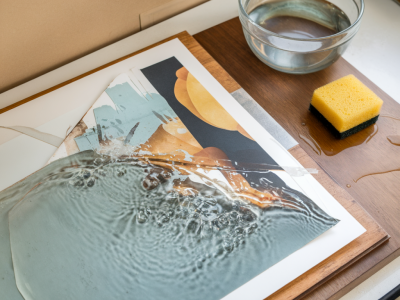
Sealing is crucial in mixed media. If you plan multiple passes of wet media, an isolation spray or a very light mist of workable fixative helps prevent gouache from reactivating unexpectedly. For final protection, acrylic isolation coats are great — they lock the gouache in and allow you to work safely on top with acrylics, oils (carefully), collage and inks.
Workflow recipes I use
Practical palette choices
For underpaintings I stick to a compact, reliable palette: a warm and cool primary pair, a neutral earth (PR101 or PBr7 variants) and a cool blue (PB29 variants). If I’m using Schmincke I choose single‑pigment colours where possible — they mix cleanly and the lightfastness is usually documented. With student paint, accept that mixtures may dull faster and plan for that in the colour relationships you want to preserve.
| Characteristic | Schmincke Horadam (Artist) | Student Brands |
| Permanence | High, documented | Variable, often lower |
| Re‑wetting | Predictable, clean | Can be gummy or stain |
| Opacity | Balanced, consistent | Often higher due to fillers |
| Cost | Higher | Lower, economical |
| Best use | Exhibition/commission underpaintings | Studies, experiments, graphic blocks |
Ultimately, the decision between Schmincke and a student brand comes down to the intended lifespan of the work, budget and how the underpainting will be used in the final piece. I’ve learned to treat gouache not just as a colour choice but as a structural element of my mixed‑media process: choose the right material for the job, test it, and prepare your surface accordingly — that way your underpainting behaves exactly as you intend as the work develops.